Boxer MBTI Personality Type
Personality
What personality type is Boxer? Boxer is an ISFJ personality type in MBTI, 2w1 - so/sp - 216 in Enneagram, RCOAN in Big 5, ESI in Socionics.
Boxer has always felt to me like one of the clearest literary examples of an ISFJ, not in a flashy or theoretical way but in a painfully human one. Boxer is not driven by abstract ideology or big visionary thinking; he is driven by duty, loyalty, and a deeply internalized sense of responsibility, which reflects dominant Si, Introverted Sensing. His entire identity is rooted in what he has learned and internalized as right and proper behavior. When the Rebellion first succeeds, he does not question the pigs’ leadership structure or analyze the political philosophy behind Animalism; instead, he holds onto simple, stable principles that he can repeatedly act on. His personal mottos, “I will work harder” and “Napoleon is always right,” show how he relies on consistent internal rules to navigate a confusing and changing world. That repetition is very Si. He trusts what has already been established, what feels familiar and proven, rather than re-evaluating systems from scratch. Even as the commandments begin to subtly change, Boxer does not rely on skeptical analysis or pattern-breaking insight; he assumes that if something appears different, then his own memory must be at fault. That is such a telling Si trait, the tendency to trust authority and established structure over one’s own reinterpretation of events, especially when that structure once provided stability. At the same time, his auxiliary Fe, Extraverted Feeling, is visible in the way his entire sense of purpose revolves around serving the collective. Boxer does not work harder for personal glory. He works harder because he believes the farm depends on him and because he emotionally invests in the well-being of the group. When the windmill collapses, he does not look for someone to blame or spiral into self-protective frustration. He immediately pushes himself further, convinced that his extra labor will protect everyone. His Fe shows in his instinctive loyalty to Napoleon, not because he has logically evaluated Napoleon’s decisions, but because maintaining unity and morale feels more important to him than questioning leadership. Boxer values harmony and cohesion over confrontation. Even when Clover senses that something is wrong, Boxer responds by doubling down on trust rather than engaging in open dissent. That reluctance to challenge authority also hints at his inferior Ne, Extraverted Intuition. He struggles to imagine alternative interpretations of reality. The idea that the pigs might be systematically betraying the original ideals is almost unthinkable to him because it requires entertaining unsettling possibilities and questioning the narrative he has accepted. Ne in the inferior position often appears as discomfort with ambiguity and with speculative thinking, and Boxer shows that clearly. He prefers concrete action to abstract doubt. Instead of theorizing about political corruption, he hauls stones. Instead of asking what the gradual changes mean, he repeats his motto and works. In my opinion, that is what makes his character so tragic. He is not foolish in a simple sense; he is sincere and structured in a way that makes him vulnerable. His tertiary Ti appears occasionally but weakly, mostly in the form of very basic logical conclusions like deciding that if the farm is in trouble, then increased effort must be the rational solution. But this Ti never matures into independent critical analysis. He does not dissect contradictions in the commandments or cross-examine Squealer’s explanations. His internal logic serves his sense of duty rather than challenging it. Boxer’s physical strength is often emphasized, but psychologically he is gentle, patient, and deeply conscientious. He wakes earlier than the others, pushes himself past exhaustion, and continues working even when injured. That endurance is not about ambition; it is about obligation. And when he collapses and is taken away in the van that is clearly marked for the knacker, the most heartbreaking part is that even then he tries to believe in the goodness of the system he served. He does not rage against betrayal; he tries to rationalize it within the framework he has always trusted. That unwavering loyalty, grounded in memory, routine, and communal devotion, feels to me like the core of an ISFJ who has given everything to protect a structure that ultimately exploits him. Boxer represents the dark side of healthy Si and Fe when they are manipulated by those in power. His tragedy is not that he lacked strength or morality, but that his very strengths, his reliability, loyalty, and willingness to shoulder responsibility, became the tools of his own downfall.
Biography
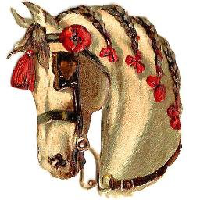
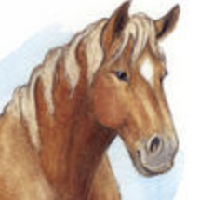
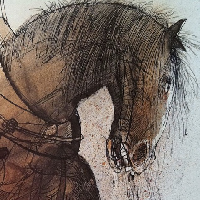
The cart-horse whose incredible strength, dedication, and loyalty play a key role in the early prosperity of Animal Farm and the later completion of the windmill. Quick to help but rather slow-witted, Boxer shows much devotion to Animal Farm’s ideals but little ability to think about them independently. He naïvely trusts the pigs to make all his decisions for him. His two mottoes are “I will work harder” and “Napoleon is always right.”