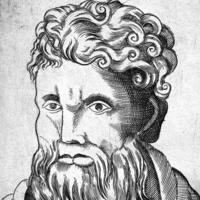
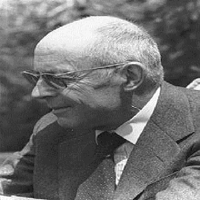
William of Ockham MBTI Personality Type

Personality
What personality type is William of Ockham? William of Ockham is an ISTP personality type in MBTI, 5w6 - - 548 in Enneagram, RCOEI in Big 5, LSI in Socionics.
The entire philosophical transcript that lies behind the razor's principle is that of a desire for sentimental reappropriation in the order of principled, oecumenic thought, which was termed an aristotelitian heresy in papal quarters during Ockham's times. This notion of desire is very close to natalism, in which case a collective unitary sentiment is drawn to form territorial bonds over more sensorially-based, we would say authoritarian, gestation of otherwise dissident philosophical gloss (the precedent for secular commentary we will find centuries later) turned on the matters of individualistic and corporeal, inductive theology, which we've always called "waves" in modern movements. It turned the idea of progress to be very similar to that of a general causal depravation to be an unreflected form of collective behavior itself, which will be returned in its philosophical, pre-socialist feudal roots in fact, in the works on "Grounding" by Simone Weil notably. Simplicity eschewed by a singled-out appreciative, pre-manoeuverable by the intellect, concept of territorial and humanly, public space-centered, gestational causality was deemed contrary to hierarchical theology which came to be fond of Abelard's elementary scholastics of subject-object. Ockham defined the position of modern societal criticism based on the equality of the freedoms of perception, which are conceived apart from each other, just like in his principle of conservative re-unition to the forbidden appeal of unitive desire, which Abelard recalled a "name" to fit temporal separativist causality around desire itself. ISTP.
Biography
William of Ockham (c.1287-1347) was an English Franciscan friar, philosopher, and theologian who is known as being one of the major intellectual forces of the fourteenth century. He is renowned for the Ockham's Razor, the methodological principle which states that "entities should not be multiplied without necessity," alongside his work in logic, metaphysics, and political thought.
Related Personalities
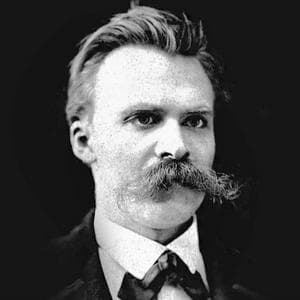
Friedrich Nietzsche
Socrates

Arthur Schopenhauer
Karl Marx

Albert Camus
Immanuel Kant
Niccolò Machiavelli

Diogenes