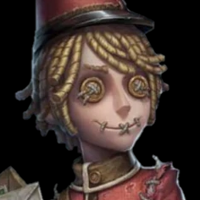
Audrey Drew tipo di personalità MBTI

Personalità
"Che tipo di personalità è Audrey Drew? Audrey Drew è un tipo di personalità INFP in mbti, 6w5 - sp/sx - 694 in enneagram, RLOAI in big 5, IEI in socionics."
"We're always free to choose. To believe what we want to believe. But when you step back, when you really look at where you've been, and the things you've done, your past will come... to devour you." “Self-Preservation 9 In Detail Sloth in the Preservation Sphere“ “Satisfying one's own hungers is the driving force of the conservation subtype of the E9. Laziness here manifests ironically, it is a substitution of nonessential satisfactions for those that he really needs. Often you can see an E9 immersing themselves in activities just to narcotize, activities such as eating, sleeping, playing games, sports, reading etc. Because of their sloth, they lose spirituality and a touch with their inner self, which can lead them acting irrationally, without clear defined actions other than just chasing physical stimulation. In short, this type has a duality between forgetting themselves through activities and a drive to ensure the most basic survival. Ichazo called SP9 "Appetite", someone who has a passion to satisfy his own hungers[1], a constant stimuli that compensates for the registration of one's necessities. Naranjo described this more in depth, conservational sloth results in carelessness about one's own survival needs, this then manifests as lack of awareness of what's actually needed, so the need for survival is replaced with a constant longing for comfort, food, distractions, sleep and other sensory stimuli.” > “Stubborn and Reactive“ “To support your reasoning you need a lot of anger and energy. He already starts with the shotgun loaded because he doesn't really trust them; he always thinks they will make him look stupid, childish, or out of place and therefore inappropriate. When he argues and does not feel heard, he automatically raises his voice: if he shouts, the other is forced to hear him. In reality, it is a way of giving energy to reasoning that cannot be sustained assertively; he thinks that the other does not understand him because he does not want to listen to him. He doesn't feel recognized and that makes him feel bad; he feels invisible, he feels that for the other he does not exist. Consequently, he is stubborn, does not easily recognize that he has made a mistake, and can cling to straws as long as he does not change his attitude or opinion. He stiffens because he feels between a rock and a hard place and must defend himself. If he recognizes that the other is right, it is like abdicating himself and he is afraid of the power that he gives to the other over him; but he also knows that his renunciation of self-assertion is to betray himself in the name of “quiet and harmonious living.” Sustaining yourself in the conflict seems crazy to you and you say to yourself: “It's okay, whatever happens.” At first he feels anger but then anxiety, doubt and fear of being alone, and weakening his drive also come. In the end he becomes stubborn so as not to appear weak, to remain faithful to his ideas.“ > “Kind and Insecure” “He is friendly. You would like to present your ideas and have something to say, even if it is often only perfunctory, and you easily remain neutral in a discussion between friends or colleagues. If he starts talking, he can become verbose and passionate about what he says, expressing himself with emphasis and emotion. While he speaks, however, he is very attentive to the expressions of those who listen to him to know if they agree or not, and slips into the sentences words that ask for approval. If he perceives nonconformity, he quickly loses confidence and becomes deflated. To understand you need simple and clear words; the right word is “frankness,” without detours or manipulations that make you lose your self-confidence. If you realize that a thought of yours, or an emotion, or a gesture, is approved and appreciated, that means that it is going well, and then it becomes a point of strength that you use repeatedly, because it acquires the value of recognition. It can be recognized in him, through him it exists for the world. This compensates for the feeling of insecurity and the threat of rejection that he experiences when he shows himself, which is part of the crazy idea that it is not correct, from the outset.” > “Resistant to change” “He has a need for certainty and it takes an effort to accept change, which raises questions on reality: he fears not knowing how to orient himself any other way; trying another path may mean getting lost, and you lack confidence in your ability to find the resources to protect yourself. He suffers change by resisting like a storm: just wait for it to pass; it remains like a reed that folds but does not break and adapts. He is afraid of what is different, afraid of not knowing how to be up to change, afraid that the situation will overwhelm him because he does not understand it. He learns not to desire in order to survive, and every change, even those he considers positive, is experienced as destabilizing.
Biografia
We haven't heard much from her, but she'll be there to show us her true personality during the Dark Revival...
Personalità correlate
You, the player (Vote your type)
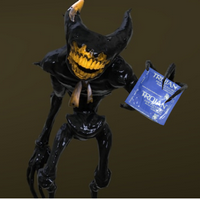
Ink Demon (BATDR)
Sammy Lawrence
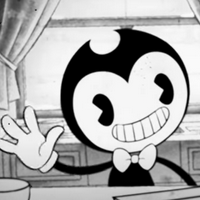
Bendy

Alice Angel

Bendy (BATDR)
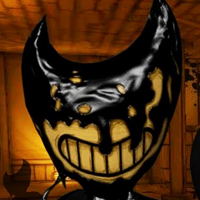
Ink Bendy
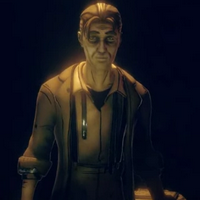
Henry Stein