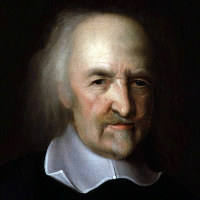
Robert Filmer MBTI 성격 유형

인격
"Robert Filmer은 어떤 성격 유형입니까? Robert Filmer은 mbti의 ISTJ 성격 유형입니다. enneagram의 6w5 - - , big 5의 , socionics의 입니다."
Robert Filmer appears to sit near the boundary between ISTJ and INTJ, though he ultimately leans somewhat more toward ISTJ with unusually developed abstract and structural reasoning. His emphasis on patriarchal continuity, inheritance, genealogical legitimacy, and historically transmitted authority strongly suggests Si–Te, yet his political thought also demonstrates a notable capacity for systemic abstraction more commonly associated with Ni–Te thinkers. Filmer does not merely defend monarchy as a traditional institution; at times he analyzes sovereignty itself as an underlying structural principle recurring beneath different constitutional forms. In Patriarcha and related writings, he argues that Roman consuls, Venetian doges, and even parliamentary systems often function as monarchies in substance despite differing in name, because political hierarchy ultimately terminates in a decisive locus of authority. This tendency to perceive continuity beneath institutional variation gives Filmer a proto-structural quality that anticipates later thinkers such as Carl Schmitt and complicates any simplistic “traditionalist = Si” reading of his thought. At the same time, Filmer’s overall intellectual texture remains more concrete, juridical, and continuity-oriented than that of more clearly Ni-dominant reactionary theorists such as Joseph de Maistre. His arguments are persistently rooted in lineage, paternal succession, inherited obligation, custom, and the organic continuity between family and state rather than in a sweeping architectonic theory of civilization. His critique of social-contract theory is grounded less in visionary political metaphysics than in the claim that liberal abstractions ignore the historically embedded realities through which societies actually emerge and sustain themselves. Even when Filmer reasons structurally, he usually does so through accumulated social forms and concrete relations of authority rather than through radically reductive universal principles. Consideration of Filmer’s life and temperament also strengthens the ISTJ interpretation. Unlike many archetypal INTJ political thinkers, Filmer was not especially revolutionary, prophetic, or system-building in personal character. He lived primarily as a country gentleman rooted in the English gentry, deeply embedded in local, familial, and royalist networks. His writings are typically defensive and preservational rather than visionary or radically reconstructive, aimed at stabilizing inherited legitimacy against what he viewed as socially corrosive theories of popular sovereignty and contractual equality. His prose is methodical, cumulative, precedent-heavy, and juridical in tone, lacking the compressed prophetic intensity found in more unmistakably Ni-oriented thinkers. In this respect, Filmer resembles figures such as Thomas Hobbes: an essentially Si–Te thinker capable of very high levels of abstraction and structural insight without fully departing from a fundamentally continuity-oriented and institutionally embedded worldview. 6w5: The central psychological orientation of his work is not personal power, moral perfectionism, or detached intellectual curiosity, but the defense of legitimacy, continuity, and stable authority against social fragmentation. Filmer consistently treats hierarchy and obedience as necessary preconditions for coherent political order, and views doctrines such as popular sovereignty or natural equality less as theoretical mistakes than as destabilizing forces that dissolve inherited structures of obligation. This security-through-legitimacy orientation is highly characteristic of Enneagram 6. The 5-wing appears in his restrained and analytical style: his arguments are systematic, juridical, impersonal, and intellectually defensive rather than emotionally polemical or charismatic. Unlike a core 1, Filmer does not primarily frame politics in terms of moral purification or ethical rectitude, and unlike a core 5, he remains deeply invested in institutional cohesion and socially embedded authority rather than detached analysis for its own sake. His overall temperament is cautious, order-oriented, legitimacy-focused, and preservational, pointing most strongly toward 6w5.
전기
Sir Robert Filmer (c. 1588–1653) was an English political theorist best known for defending patriarchal monarchy and the doctrine of divine-right kingship in his influential work Patriarcha. Writing during the political and religious upheavals of early modern England, Filmer developed one of the most systematic critiques of social-contract theory and popular sovereignty prior to the liberal tradition’s ascendancy. He argued that political authority originates in the natural and paternal structure of the family rather than in voluntary agreement among formally equal individuals. Although later liberal thinkers such as John Locke wrote extensively against him, Filmer remains an important figure in the history of political thought for articulating a rigorous defense of hierarchy, continuity, inherited authority, and pre-liberal conceptions of social order.
인격 correlate
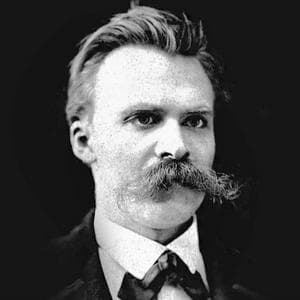
Friedrich Nietzsche
Socrates

Arthur Schopenhauer
Karl Marx

Albert Camus

Immanuel Kant
Niccolò Machiavelli

Diogenes