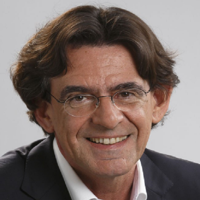
Gorgias typ osobowości MBTI
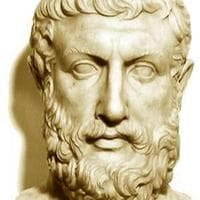
Osobowość
"Jaki typ osobowości jest {profilename}? {profilename} jest typem osobowości {mbti} w mbti, {enneagram} - {iv} - {tritype} w enneagram, {big5} w Big 5, {sociionics} in Socionics."
Like the consensus, I think Gorgias is ENTP. What stands out most is how exploratory his thinking is. On Non-Being doesn’t read like a fixed belief system — it reads like pushing an idea as far as it can possibly go just to see what happens. That kind of “let’s follow this to its extreme” feels very Ne. There’s also clear Ti underneath it. His arguments aren’t random or chaotic — they’re structured, internally consistent, and deliberately constructed, even when the conclusions are absurd. It’s less about what’s true and more about whether the logic holds. And then his rhetoric — the way he performs, persuades, and captivates audiences — feels like tertiary Fe. He understands people, but he’s using that to amplify ideas, not to align them around shared values (which is why ENFJ doesn’t quite fit for me). He doesn’t come across as someone trying to define truth — more like someone showing how flexible truth can be depending on how you argue it. More Ne–Ti than anything else. I write more about figures like this here: historicalfigurembti.com/posts/gorgias
Biografia
Gorgias was a Sicilian philosopher, orator, and rhetorician. He is considered by many scholars to be one of the founders of sophism, a movement traditionally associated with philosophy, that emphasizes the practical application of rhetoric toward civic and political life. The sophists were itinerant teachers who accepted fees in return for instruction in oratory and rhetoric, and many claimed they could teach anything and its opposite (thesis and antithesis). Another aspect of their method was the ability to make the weaker argument the stronger. The term sophist in classical Greek was a general appellation denoting a “wise man.” They were important figures in Greece
Osobowość correlate
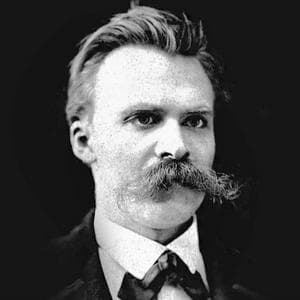
Friedrich Nietzsche
Socrates

Arthur Schopenhauer
Karl Marx

Albert Camus
Immanuel Kant
Niccolò Machiavelli

Diogenes