Rafał tipo de personalidade mbti

Personalidade
"Que tipo de personalidade é Rafał? Rafał é um tipo de personalidade INTP em mbti, 5w6 - so/sp - 531 em enneagram, RCOEI em Big 5, LII em sociônicos."
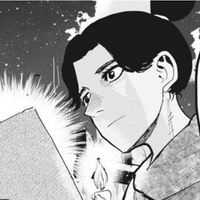
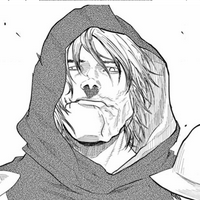
I understand why people voted for Mistyped ENTJ. Let's look at my analysis. The anime is told from "Rafal" perspective (You can read my analysis in the comments.) After watching this anime repeatedly Here is my analysis, as an ENTJ and former orphan, on why Rafal in the "anime" is an INTP 5w6 edited -> Trifix 9w8-5-3 Referring to the case Rafal (ep.1-3) ≠ Rafal (ep.24) 1. Dominant Function: Introverted Thinking (Ti) It is the most powerful thing that drives all his actions and beliefs. Ti is the desire to build a "perfect and coherent logical system" in his own head. He doesn't believe in the "rules" of the external world, but he believes only in the "truth" that he has analyzed and understood. Why does he need a perfect "system"?: Because the "wound" from being an orphan taught him that the "external world" is cruel, illogical, and untrustworthy. The "inner world" is his only "sanctuary": He therefore must build an "inner world" full of "logic" and "truth" that he can "control" to be a "sanctuary" from the chaos of the external world. Adherence is a "defense mechanism": His adherence to his own "correct answers" is his attempt to "protect" his fragile and beautiful inner world from being destroyed by the illogic of the external world. Passion for astronomy: He doesn't just "like" stars, but he tries to "understand" their operating system logically. Passion for Heliocentrism theory: He doesn't just "love" astronomy, but it is the "most beautiful truth" for him. It is a "system" that is logical and elegant. Because he has the idea that Logical consistency = Beautiful After slipping and trying to prove it at home 2. Auxiliary Function: Extraverted Intuition (Ne) This is how he explores and connects with the external world. Ne is the ability to see "possibilities", "connections", and "patterns" that others may not see. He can link "slipping" after talking to Hubert to "the movement of the world". (What if I were the world and the mountain was the sun?) 3. Tertiary Function: Introverted Sensing (Si) Si is about emphasizing "memories" and "experiences" that are concrete and meaningful to oneself. Rafal has "wounds" from being an orphan: This experience is deeply ingrained in his mind. It is "raw data" that his Ti uses to create all his "rules of survival" (e.g., the need to pretend). Loyalty to Mr. Hubert: Mr. Hubert's teachings and philosophy have become the most important "reference data" in his life. 4. Inferior Function: Extraverted Feeling (Fe) He "doesn't understand" emotions, but he "knows" they exist. Fe is a function related to "collective feelings" and "social harmony." The fact that it is his weakest point means he cannot "read" or "manage" other people's emotions naturally. "Pretending" is a "problem-solving principle" Because he doesn't understand how to be accepted, his "brain" (Ti) creates the simplest "principle": "If I act like the 'good child' that everyone expects, I will be safe and not abandoned." His pretense doesn't come from cunning, but from "fear" and "an attempt to survive" in a world he doesn't understand. He "pretends" to be a good child to please others (trying to use his underdeveloped Fe). He "fears" directly contradicting Mr. Potocki. He "doesn't understand" why people have illogical feelings. (1/2)