George Eliot тип личности MBTI
Личность
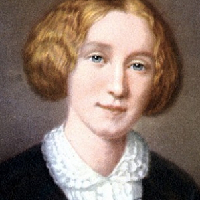
"Какой тип личности является George Eliot? George Eliot - это тип личности INFJ в mbti, 5w6 - SO2 - 514 в Enneagram, RLOEI в Big 5, EII в Socionics."
(1/2) My argument to @[Violoncello]. For starters, I think it's important to distinguish T vs F in general. As IDRlabs put it, "If simplicity were called for, we think a useful distinction to use between Thinking and Feeling is to say that Thinking is interested in the 'mechanics' of a thing, while Feeling is interested in the 'value' of a thing. Of course, Thinking will roam into the realm of Feeling occasionally (and vice versa). But as a rule, the T type will more naturally evaluate sentiments and values in a mechanical way, while the F type will more naturally evaluate the sentiments and values inherent in mechanics. Both types of Thinking (Te and Ti) are focused on the impersonal mechanics and principles that underlie phenomena." In this sense, you can see where the idea of Elliot having repressed F (and dominant Te) falls apart, no? Her exploration of the human-condition is not primarily a mechanical, quantitative, reductive, or structural project, so to speak. She is not charting human behavior to build an external "world-formula" or to optimize societal efficiency. Even in the times we do see her analyze the mechanics of a situation (whether in her writing or what not), she is still going about it in the F way of "naturally evaluat[ing] the sentiments and values inherent in mechanics" as opposed to "evaluat[ing] sentiments and values in a mechanical way." In other words, while Eliot may analyze the "mechanics" of a social situation (whether in her novels or letters), she does so in service of evaluating the underlying humanistic sentiments and values. As Elliot herself said, in her own words: "The only effect I ardently long to produce by my writings, is that those who read them should be better able to imagine and to feel the pains and the joys of those who differ from themselves in everything but the broad fact of being struggling erring human creatures." So even in times of using T, it was in the aims of her F. This aligns with what both IDRlabs and Myers said, that "with all of the F types, their thinking will often be subservient to their feeling, as Myers said." Another example of her F preference (and lack of Te) comes from this excerpt in her letter to her lover Herbert Spencer (whom was a sociologist and I'm certain had a Thinking preference over Feeling): "No credit to me for my virtues as a refrigerant. I owe them all to a few lumps of ice which I carried away with me from that tremendous glacier of yours ... my brain will soon be a mere pulp unless you come to arrest the downward process." As shown, she critiques his cold, intellectual, and emotionally detached personality calling him a "glacier." She then says that any cool, calm composure she currently possesses isn't her own natural virtue; she only has it because she stole "a few lumps of ice" of his icy, unfeeling nature during their recent interactions. She then (and this is the most important part against a Te preference, let alone in the dominant position) teases his reliance on scientific terms ("Sinking fast towards 'homogeneity'"). Doesn't sound like someone a Te dominant with repressed Feeling. It's also very important to note that the inferior function is repressed, meaning that is it, as von Franz put it, “is a horse that cannot be educated. … You can never rule or educate it and make it act as you would like." If she really was an ESTJ then, because of repressed F and "differentiated" T, she would look at her work in more purely mechanical terms (or at least her attempts at F would be extremely archaic, infantile, and black-and-white) but as shown before (based on all the evidence I've presented) this doesn't follow at all. If you want to contrast Elliot with an actual Te dominant type studying human nature, look at H.J Eysenck (ENTJ) who, per IDRlabs, "crunched the numbers of any and all psychological phenomena known to his time, pronouncing clearly what was 'sense' and what was 'nonsense'."
биография
George Eliot is the pen name of Mary Ann, or Marian, Evans (22 November 1819 – 22 December 1880), an English novelist. She was roughly contemporary with Charles Dickens, but started writing later than he did. Her first fiction, an installment of a story later collected in Scenes of Clerical Life, was published in 1857, and her first novel, Adam Bede, in 1859. Her best-known novels are Silas Marner and Middlemarch, the latter usually being considered her masterpiece. She wrote chiefly about rural, provincial middle-class life and was a shrewd observer of people's thoughts and motivations, with a dry sense of humour. She also wrote poetry, and (after giving up her childhood Anglican faith) translated antireligious works and she wrote Silly Novels by Lady Novelists, perhaps the first ever listing of Mary Sue Tropes. She lived fairly openly with her lover George Henry Lewes, whom she considered her husband though he was married to another woman. It was one factor in her using a pen name
Личность correlate
Fyodor Dostoevsky
Anne Frank

Edgar Allan Poe
William Shakespeare
George Orwell
Oscar Wilde
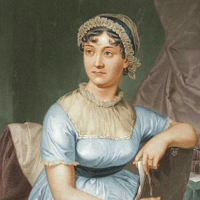
Jane Austen
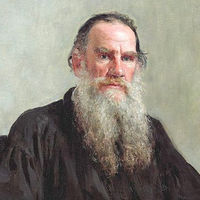
Leo Tolstoy (Лев Толсто́й)