Ramana Maharshi MBTI性格类型
性格
"Ramana Maharshi是什么人格? Ramana Maharshi是MBTI中的INFJ人格类型,九型中的5w6 - - ,五大类型中的,Socionics中类型。"
6w5 INFJ The best accounts of his early years indicate that he was beset with fear that drove him into isolation and dysfunction. He lived a life of devotion and duty, both to others and to his concept of the divine while maintaining a safe social distance. Additionally, his teachings were characterized by conundrums and contradictions, which are typical of type six thinking (some things can be true and not true at the same time). He could intuitively assess a person‘s ability to understand his teaching, and modify it to suit their level of development. A Five would be unlikely to do this as their focus would be on the methodology. This man was a social/self-preservation Type Six (Duty).
背景
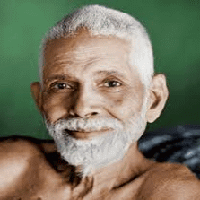
Ramana Maharshi (30 December 1879 – 14 April 1950) was an Indian Hindu sage and jivanmukta (liberated being). He was born in Tiruchuli, Tamil Nadu, India. In 1895, an attraction to the sacred hill Arunachala and the 63 Nayanmars was aroused in him, and in 1896, at the age of 16, he had a "death-experience" where he became aware of a "current" or "force" (avesam) which he recognized as his true "I" or "self", and which he later identified with "the personal God, or Iswara", that is, Shiva. This resulted in a state that he later described as "the state of mind of Iswara or the jnani". Six weeks later he left his uncle's home in Madurai, and journeyed to the holy mountain Arunachala, in Tiruvannamalai, where he took on the role of a sannyasin (though not formally initiated), and remained for the rest of his life. He attracted devotees that regarded him as an avatar and came to him for darshan ("the sight of God").