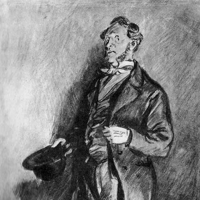
Pyotr Stepanovich Verkhovensky MBTI Personality Type

Personality
What personality type is Pyotr Stepanovich Verkhovensky? Pyotr Stepanovich Verkhovensky is an ENTJ personality type in MBTI, 3w4 - so/sp - 835 in Enneagram, SLOEI in Big 5, LIE in Socionics.
Pyotr Verkhovensky is a clear ENTJ. However, before anything else, it is crucial to dissect such a complex character. Verkhovensky is the 'little devil' archetype; devoid of grand ideas or high ideals, he is driven purely by political convenience. Cynical to the core, he says of himself: 'I am a scoundrel, not a socialist.' Socialism, for him, is merely a means to an end. Pyotr aims for power—total, unlimited power over people's lives, thoughts, and feelings. Pyotr operates in a zone of 'legalism' that devolves into chronic illegality. For him, success is always placed above truth, revealing a perverted human nature that seeks self-affirmation by manipulating his associates through threats and blackmail. Stavrogin mocks Pyotr by claiming he has a 'chancery' (a government office) in his head. This reinforces his dominant Te (Extraverted Thinking), showing that he processes reality in a purely bureaucratic and administrative manner. As he says, 'There is nothing stronger than a uniform.' For him, everything is about mass control. In The Government Inspector, Gogol introduces Khlestakov, a character who became a central object of study in Russia. Pyotr embodies what could be called a 'bloody Khlestakovschina,' using the levity of an impostor for the purposes of real political violence. He considers himself a 'nothing' in his own eyes and the eyes of others, yet through lies and manipulation, he becomes a 'King' to the world. Fedka, a common criminal, despises Pyotr and considers him the 'prime murderer,' asserting that Verkhovensky stopped believing in God because of his own debauchery. Pyotr does not resemble Ivan Karamazov, who treated God as an intellectual dilemma. In reality, Pyotr's unbelief stems from moral corruption and depravity. Pyotr requires a symbolic figure to move forward, and that figure is Stavrogin. 'Without you, I am a zero. Without you, I am a fly, an idea in a flask, a Columbus without America.' Verkhovensky is incapable of proceeding without the figure of 'Ivan Tsarevich'—a mystical, legendary leader who would consolidate Pyotr's power before the people. His auxiliary Ni (Introverted Intuition) seeks to centralize and synthesize insights into a quintessential idea. Pyotr is driven by a vision that everything must be destroyed to build a new edifice. Although it may seem like pure chaos, his Ni perceives the underlying pattern of a new world order based on Shigalev’s system. We can observe that Pyotr is a seed for what would become the character of the Grand Inquisitor, Ivan Karamazov’s creation. Both share the vision that humanity must be transformed into a vast herd, where labor is mandatory and life is organized to maintain total obedience. Verkhovensky’s tertiary Se (Extraverted Sensing) is fascinating. It manifests as his enthusiasm for destruction—a passion for disaster. He prefers to 'burn it all down' to clear the way for a new structure. As a shrewd man, he acts with opportunism, seizing the vividness of the present moment to destabilize social foundations. Pyotr has no roots in the spiritual soil or Russian culture. His inferior Fi (Introverted Feeling) shows how he is condemned to loneliness and spiritual impoverishment, despite his vast external influence.
Biography
Related Personalities

Nikolai Vsevolodovich Stavrogin
Alexei Nilych Kirillov

Stepan Trofimovich Verkhovensky
Ivan Pavlovich Shatov

Varvara Petrovna Stavrogina
Darya Pavlovna Shatova

Lizaveta Nikolaevna Tushina
Liputin