Thai Cat MBTI Personality Type
Personality
What personality type is Thai Cat? Thai Cat is an ENFJ personality type in MBTI, 7w6 - - in Enneagram, in Big 5, in Socionics.
Thai and Siamese are almost the same except Thai cats are seen as more stable. I’ll give it the same I gave to the Siamese, ENFJ sx/so classic, but less needy In both 7w6, 7w8 and 2w3 or 2w1 are the most possible wings 7w6: anxious when alone for too long, and other things classic of these cats 7w8: more bossy, still energetic and bold 2w1 and 2w3: more lovely cuddly cats, very dependent Thai energy: happy and stable rather than hyper and dramatic of a siamese For thai, extraversion 75% and higher
Biography
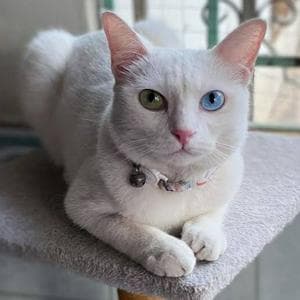
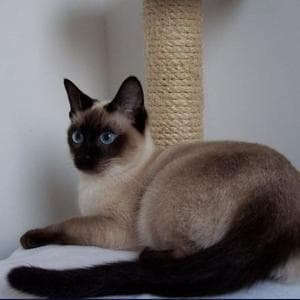
The Thai or Wichien Maat (Thai: วิเชียรมาศ, [wí.tɕʰīan.mâːt] , RTGS: wichianmat, meaning 'diamond gold') is a newly[when?] renamed but old cat breed, related to but different from the Western, modern-style Siamese cat. This natural breed is descended from the cats of Thailand, and, among various groups of breeders in different times and places, has also been called the Old-Style Siamese, Traditional Siamese, Classic Siamese; Wichien Maat (anglicised from the Thai name); and the Applehead, a nickname that originated in the 1950s (originally as a pejorative used by breeders of the modern-style, more extreme-featured Siamese). According to The International Cat Association: "The Thai is the breed dedicated to preserving the native pointed cat of Thailand in as close to its original form as possible." Compared to the modern-style, more extreme-featured Siamese, the traditional Thai breed (and native wichienmaat specimens) have a much more moderate appearance. Cats that were imported from Siam (today, Thailand) to Western countries in the 19th and early 20th centuries were more moderate in conformation than the modern Western Siamese. While the Thai has common ancestry with the Western Siamese, separate breeding, beginning after World War II, led to the development of two distinct breeds, with more extreme features dominating the cat show circuit and becoming the dominant variety of Siamese in the West.Starting in the 1980s, various breed clubs in both North America and Europe appeared that were dedicated to preserving the type that represents the early 20th-century Siamese and is still found in Thailand. The World Cat Federation (WCF) recognized the original style as a separate breed, Thai, with full championship competitive status, in 1990. In the United Kingdom and North America, the cats continued to be registered as Siamese. In 1999, in North America, the independent club PREOSSIA coined the name Old-Style Siamese to refer specifically to the moderate, original type of registered Siamese. In 2000, the Old-style Siamese Club, or OSSC, was formed in the UK. It was originally called The Classic Siamese Club but changed the name after someone in the USA claimed to have copyright over the name. Native pointed cats were imported directly from Thailand, beginning in 2001, to refresh the gene pool of the Western, pedigreed Thai breeding programmes and ensure that the traits of the indigenous Southeast Asian cats are preserved and distinct in these bloodlines. Beginning in 2007, members of PREOSSIA began the new breed application process in The International Cat Association (TICA). It was necessary to request separate breed status from the Siamese to permit the Old-Style Siamese to be bred and shown using different registration rules and a different breed standard. However, TICA refused to allow the name Old-Style Siamese for the "new" breed, and breeders decided to follow the example of the Europeans and use the name Thai. In January 2010, the Thai was granted Championship status in TICA, enabling it to compete for top honours along with the other breeds of pedigreed cats.Although by this time, the Thai had been recognized by WCF for 20 years, one major European registry still had not recognised the breed. At last, in 2015, Fédération Internationale Féline (FIFe) accepted the Thai in its "Preliminary Recognized Breeds" class. Long before its re-branding as the Thai, the old type of Siamese was part of the foundation stock of a variety of new 20th-century breeds, such as the Himalayan, Ocicat, and Havana Brown. Near the end of the 20th century, modern Siamese were used more frequently for this purpose, as in the case of the Cornish Rex and Peterbald.