Ticked tabby MBTI Personality Type
Personality
What personality type is Ticked tabby? Ticked tabby is an INTP personality type in MBTI, - - in Enneagram, in Big 5, in Socionics.
Biography
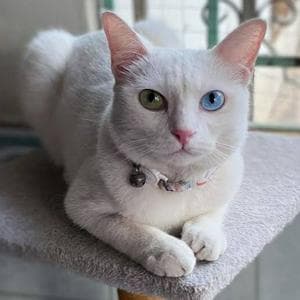
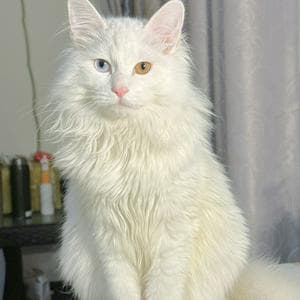
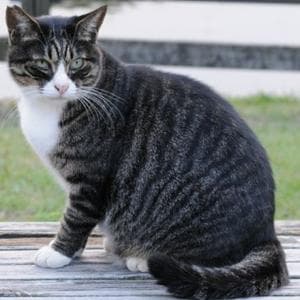
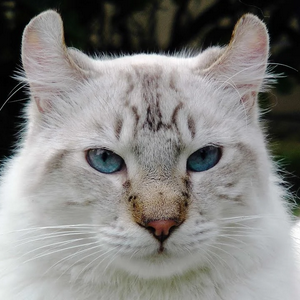
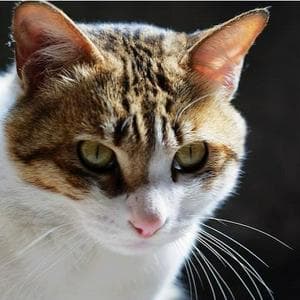
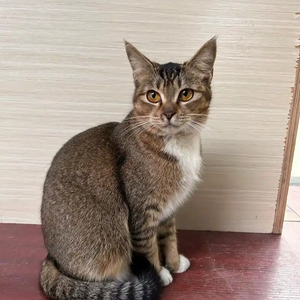
The Chinese tabby cat (Ticked tabby), also known as the spotted cat, has no obvious stripes, only a few residual stripes on its forehead, neck, legs, or tail. It is commonly referred to as its original color or hare color, and is said to be the primitive state of the Dragon li (this is unverified). 40,000 years ago, during the flourishing period of mammals on Earth, there was an animal called the saber-toothed tiger. It can be considered the earliest ancestor of cats, but it became extinct 20,000 years ago. We can only see its fossils in biological and geological museums and imagine its fearsome appearance. Another theory is that the common ancestor of cats and dogs is an extinct animal—the ancient cat-like beast. Many animals, such as bears, weasels, raccoons, foxes, and wolves, may also be descended from this animal. Based on archaeological discoveries and paleontological analysis, this animal lived in trees, had a similar appearance to cats and dogs, a large body, a long tail, short legs, and retractable claws like a cat. Domestic cats evolved from wildcats. The ancestor of the Asian domestic cat is the Indian desert cat. Paleontologists have discovered numerous wildcat remains in ancient strata in Southern Europe and North Africa, suggesting that cats were already widespread wild animals during the Pliocene Ice Age. One branch of the Chinese domestic cat is the Asian domestic cat. It has no obvious stripes, only a few residual stripes on its forehead, neck, legs, or tail. Commonly known as its original color or hare color, compared to tabby cats, the Asian domestic cat has very distinct characteristics: a long face, large ears, large eyes, a pointed small muzzle, and a slender, agile body. It frequently grooms itself; kittens often lick themselves to clean themselves. After eating, it will wipe its whiskers with its front paws; after urinating, it will lick its anus with its tongue; and after being held, it will lick its fur. A cat's tongue has many rough little bumps, which are perfect for removing dirt. Among domestic animals, cats are the most hygienic. You can see cats washing their faces with their paws every day. Furthermore, they always urinate and defecate in the same place, and afterwards, they will cover their feces with their paws. Cats' cleanliness is a major reason why people want to keep them. But are cats really as hygienic and obsessively clean as people imagine? Actually, a cat's grooming is entirely a physiological necessity. For example, cats lick their fur to stimulate the secretion of sebaceous glands, making their fur shiny and smooth, less prone to getting wet, and allowing them to ingest small amounts of vitamin D, promoting normal bone development. It also fluffs up the fur, aiding in heat dissipation. This is easy to understand if you observe when cats groom themselves. Cats generally groom themselves after eating, playing, after vigorous exercise such as chasing prey, or after waking up from a nap in the sun. In hot weather or after strenuous exercise, their bodies generate a lot of heat. To maintain a constant body temperature, they must expel this excess heat. While humans can relieve this through rinsing or sweating, cats have underdeveloped sweat glands and cannot evaporate large amounts of water. Therefore, cats use their tongues to spread saliva onto their fur. The evaporation of the water in the saliva carries away heat, helping them cool down. Regular brushing during shedding promotes new hair growth. Additionally, scratching and biting helps prevent parasitic infections like fleas and lice, keeping cats healthy. Based on this habit, cats should be fed in the morning and evening, as their bodily functions are most active then, leading to larger appetites and better digestion. Mating should also be scheduled for the evening to ensure a higher success rate. This behavior is generally not welcomed by cat owners.