Akos Hu type de personnalité MBTI

Personnalité
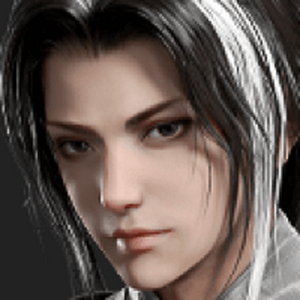
"Quel type de personnalité est Akos Hu? Akos Hu est un type de personnalité ESTP dans MBTI, 8w7 - sx/sp - 874 dans Enneagram, dans Big 5, SLE dans Socionics."
“He threw back his head and roared: ‘Now!’” “The two men who had struggled against hardship had become ferocious and unmerciful foes, tigers in their own right.” Se gives him lightning‑fast reflexes, an acute awareness of his physical environment, and a fearless readiness to act. Whether stalking bandits in the dark, pouncing on a bear‑riding invader, or charging headlong into an ambush, he trusts his senses implicitly. He savours the scent of lilac on the wind and the feel of a horse beneath him; the physical realm is his native language. “Surprise is all there is… but they were committed.” “It was for this reason that the army so desired their conscription.” Ti gives the ability to assess a situation with surgical precision and devise a plan that exploits every weakness. His year‑long infiltration of the bandits earning their trust, learning their rhythms, and orchestrating a midnight coup is a masterpiece of internal logic, executed with the patience of a predator sizing up its prey. Even in the heat of failure, he immediately dissects what went wrong: the Crag Bear camp was bait, the drums were positioned on the high ground, and he should have trusted his gut. “You are no longer welcome.” “My people… It’s my fault I wasn’t here to lead them.” He's not an impersonal warrior; his entire life is a testament to the bonds he shares with his people. He weeps inwardly for the burning huts, risks his plan to comfort a terrified drunk who was once his “brother,” and carries a crushing guilt for every Cloudsparrow villager he couldn’t save. His charm, too, is Fe‑based, he can befriend bandits, rally villagers, and command the respect of hardened soldiers. His anger at Yueshan’s inflexible honour code stems from a clash of values: for Akos, loyalty to one’s people outweighs any abstract principle. The Grip: “A grim sense of unease crept over him. This was… too easy.” “He never raised his head in time to see a single arrow whistle down and bury itself in Xiu’s chest.”. Under stress, it can manifest as sudden, paralyzing foresight or an obsessive fixation on a single doomed outcome. The Crag Bear ambush is the inferior Ni in its most destructive form. Akos hears the inner whisper that something is wrong, the camp is too small, too quiet, the warriors too young and too starved but his dominant Se and Ti, hungry for action and convinced of their own logic, override the warning. He charges anyway, and the trap snaps shut. When Xiu falls, Akos’ world narrows to a single, terrible point: the man he called brother is dead, and it was his plan that killed him. In the grip, the normally adaptive ESTP becomes rigid, chasing a doomed path because he cannot pivot from the vision he has already committed to. The final image, Akos kneeling in the mud, knife raised, roaring defiance at an oncoming horde, is the Se hero facing the abyss his Ni saw coming but could not prevent. SX8: His story is about Xiu. The man he calls brother, the one who stood beside him since childhood, the second‑in‑command whose death Akos blames entirely on himself. When Xiu falls with an arrow in his chest, Akos’s world narrows to a single, burning point of grief and guilt. His roar of defiance at the oncoming horde is not a general’s call to arms; it’s the scream of a man whose entire emotional universe has just been ripped apart. Doesn’t desert the Imperial Army because he has a political ideology. He deserts because he cannot stand the rigid confines of civilisation, and because his loyalty is to his people. He infiltrates the bandits for revenge. He disobeys Commander Yueshan not out of disrespect for rank, but because the plan that would save his people was dismissed in favour of hollow “honour.” Every act of defiance is an act of personal sovereignty: You will not control me, and you will not harm my own.