Étienne de La Boétie type de personnalité MBTI
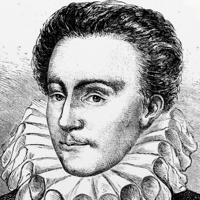
Personnalité
"Quel type de personnalité est Étienne de La Boétie? Étienne de La Boétie est un type de personnalité dans MBTI, 5w6 - - dans Enneagram, dans Big 5, dans Socionics."
La Boétie était un adepte de la métalogique universelle dépassant les périodes divines de l'amalgame, et peu finalement peut être dit de l'importance moraliste de sa conception de la liberté humaine et des chaînes de l'habitude. La conception politique nous empêche tout simplement de réaliser une coalition de cet amalgame, et c'était justement ce qu'il appelait l'habitude comme à la base des chaînes de la servitude. L'aspect "populaire" était second et n'était à comprendre qu'à travers le linceul de la hiérarchie de l'état de droit naissant à l'occasion de l'Edit de Nantes (proposition strictement politique qu'essaiera de résoudre Montaigne par l'entièreté de son oeuvre par la suite: ne vous fiez pas à son caractère cynique éparpillé). C'est indicateur de la dilapidation du Ti en gamme supérieure: trouver une liberté qui n'est pas "là" devant le Nous, si celui-ci ne pouvait se fier à la dégradation hiérarchique par la promotion de l'habitude et de sa présence dans le droit divin de se lier en fait, il faut le clarifier, à ses propres chaînes, dans un problème social large préfigurant la banalité de la raison qui n'était plus recherché par le politique. La réalité de l'animation divine de la pensée devait s'auto-clarifier jusqu'au point de s'en sortir par le seul appareil social, les chaînes de la servitude dans cette préférence métalogique, étant plus larges à leur tour, ce qui explique la conséquentialité d'une représentation divine de la pensée sur elle-même comme moment "inchangé" de la servitude-seule, séparée de sa popularité (son sens du "politique" (Julien Freund)). Il s'agit là d'une indication d'une tautologie parfaite séparée d'une pensée donc effectivement asservie (Ne). INTP. Accroche: Ici je pense "populaire" comme "volontaire" bien-sûr, et c'est voulu. La Boétie was an adherent of a universal metalogic that transcended the divine eras of amalgamation; ultimately, little can be said regarding the moral significance of his conception of human freedom and the chains of habit. The political conception simply prevents us from forging a coalition out of this amalgamation—precisely what he identified as "habit" lying at the root of the chains of servitude. The "popular" aspect was secondary, to be understood only through the shroud of the rule-of-law hierarchy emerging with the Edict of Nantes (a strictly political proposition that Montaigne would later attempt to resolve through the entirety of his work—do not be misled by his seemingly scattered cynicism). This points to the squandering of the "I" in a higher register: the quest for a freedom not immediately present before the "We"—assuming the latter could not rely on the hierarchical degradation brought about by the promotion of habit and its role in the divine right to bind oneself (in fact, this must be clarified) to one's own chains. This unfolds within a broad social problem that prefigures the banality of reason—a reason no longer sought by the political sphere. The reality of the divine animation of thought had to clarify itself to the point of finding a way out through the social apparatus alone; the chains of servitude—within this metalogical preference—were themselves more expansive, explaining the consequential nature of a divine representation of thought reflecting upon itself as an "unchanged" moment of servitude *per se*, divorced from its popular dimension (its sense of the "political," in Julien Freund's terms). This indicates a perfect tautology, distinct from a thought that is, in effect, enslaved (Ne). INTP. Note: Here, I conceive of "popular" as "voluntary," of course—and this is intentional.
Biographie
Étienne de La Boétie ([labɔesi][1] or [labwa'ti][2],[3]) was a French humanist writer and poet, born on November 1, 1530 in Sarlat, a town in the southeast of Périgord, and died on August 18, 1563 in Germignan, in the commune of Taillan-Médoc, near Bordeaux. La Boétie is famous for its Discourse of Voluntary Servitude. From 1558, he was a close friend of Montaigne, who paid him posthumous homage in his Essays.
Personnalité correlate
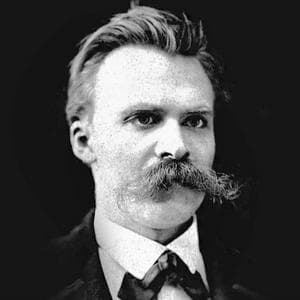
Friedrich Nietzsche
Socrates

Arthur Schopenhauer
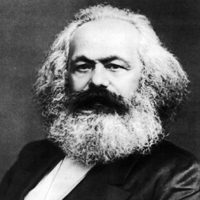
Karl Marx

Albert Camus
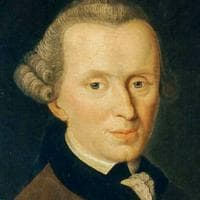
Immanuel Kant
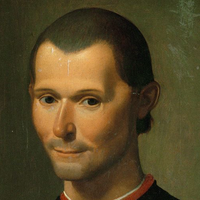
Niccolò Machiavelli
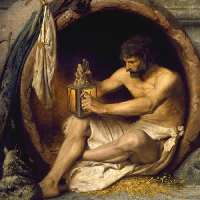
Diogenes