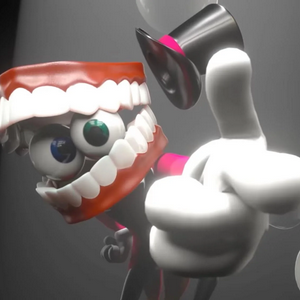
Kinger typ osobowości MBTI

Osobowość
"Jaki typ osobowości jest {profilename}? {profilename} jest typem osobowości {mbti} w mbti, {enneagram} - {iv} - {tritype} w enneagram, {big5} w Big 5, {sociionics} in Socionics."
I’ve been observing and analyzing this character for a long time, and I want to share my perspective. I’ve been doing consistent analysis for months, so this isn’t a surface-level take. I also use a translator and chat gpt for better understanding. First of all, I want to completely discard the image of “dumb” or “insane” Kinger. This state is clearly not his core personality. His mind appears to be influenced or suppressed by Caine, and we repeatedly see that Kinger becomes coherent only in darkness. I focus specifically on Kinger’s behavior, speech, and decision-making when he is in the DARK — the only moments where his cognition appears stable and self-directed. 1) Communication and awareness in darkness — Fe–Ti activation Kinger communicates meaningfully almost exclusively when he is in darkness. A clear example is Episode 2, during the scene with the bucket on his head. The moment darkness blocks his vision, he suddenly recalls Ragatha’s arrival at the circus with surprising accuracy and attention to detail. Later, at Kaufmo’s funeral, he speaks with his eyes closed — once again intentionally placing himself in darkness. This strongly suggests that Kinger is aware of his own cognitive state and deliberately creates the conditions in which he can function properly. When conversations become emotional or meaningful, he organizes the environment to support his cognition. From a cognitive-function perspective, this looks like a Fe–Ti axis at work. Fe (Extraverted Feeling) allows him to attune to the emotional atmosphere, people’s states, and interpersonal context. Ti (Introverted Thinking) helps him internally structure his thoughts, connect facts, and speak clearly once external overstimulation is removed. 2) Social priority even in unstable states — auxiliary Fe Even when Kinger appears “insane,” his attention is still oriented toward people rather than systems or abstract problem-solving, which points toward auxiliary Fe. In Episode 3 (Caine’s horror adventure), while everyone else is focused on listening to the ghost and following the rules, Kinger is in the background helping Pomni put her eyes back in place. He even offers emotional reassurance (“It happened to me too”) instead of prioritizing the instructions. Later, when he believes Gangle has fallen through the wrong door, he immediately jumps after her without hesitation. While this alone is not definitive proof of Fe, it still shows instinctive concern for others over analytical caution, which does not align well with a Ti–Ne decision-making pattern. It’s also worth noting that the lobby during this scene is relatively dark, which may explain why Kinger appears more socially coherent and responsive than usual. 3) Protective behavior and emotional regulation — Ni–Fe over Ti–Ne When Kinger and Pomni are alone in total darkness, his behavior becomes even more telling. He immediately takes on a protective role: “Stay behind me.” Throughout the episode, Kinger shows heightened awareness of Pomni’s emotional state. When she panics, he slows down, stays close, and prioritizes calming her rather than immediately solving the problems. In a critical or dangerous situation, a Ti–Ne user would be more likely to prioritize analysis, exploration, or rapid problem-solving. Kinger, however, refuses to move on until he is confident in Pomni’s emotional readiness. This suggests Fe-driven emotional regulation combined with Ni’s long-term, meaning-focused perspective. His dialogue reinforces this strongly: “In this world, the worst thing you can do is make someone think they’re not wanted or loved.” When Pomni worries that Kinger may not remember their conversation afterward, his response is deeply Ni–Fe: “Don’t worry about me. As long as you remember, things will be okay.” And finally: “Just hold on to me. We’ll get through it together.” These statements prioritize shared meaning, emotional continuity, and interpersonal bonds over factual certainty or personal memory — a hallmark of Ni–Fe rather than Ti–Ne. 4) Group awareness and emotional insight — refined Fe–Ti In Episodes 4–6, Kinger repeatedly shows a willingness to yield his position for the sake of others: “I can sit this one out, and Zooble will take my place.” Even outside complete darkness, he continues to monitor the group’s overall well-being. He listens quietly, observes dynamics, and intervenes only when emotional support is needed. His conversation with Ragatha is especially revealing. While in the dark, Kinger quickly identifies the core of her emotional distress. This is a classic Fe–Ti interaction: Fe reads the emotional atmosphere and unspoken tension, Ti distills the situation down to its essential truth and formulates precise, supportive language. In conclusion, I don’t deny that Kinger uses Ti effectively — but strong Ti is not exclusive to INTPs. Many INFJs, especially INFJ 5w6, demonstrate highly developed Ti while still prioritizing Fe in interpersonal contexts. ↓
Biografia
Kinger is one of the main characters of the Glitch Productions show, The Amazing Digital Circus. His wife was in the digital circus with him but abstracted before Pomni entered the digital world.