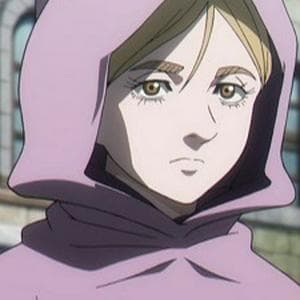
{{ชื่อ}} ประเภทบุคลิกภาพ MBTI

บุคลิกภาพ

"Draka ประเภทบุคลิกภาพประเภทใด Draka เป็นประเภทบุคลิกภาพ ใน mbti, 5w6 - sp/so - 385 ใน Enneagram, ใน Big 5, SLI ใน Socionics"

She belongs to the Central quadrants, is LIE。 —— First, regarding the Enneagram. I am still thinking about what her core type might be, but I don’t believe it is Type 3, which currently has many votes. For example, her belief is “to earn more money until the unease disappears.” Type 3 belongs to the heart center, but she collects money not to shape an image of reliability and status, but as a “survival resource.” I am more inclined to consider an 8 fix. However, the starting point of her belief is not grounded in practicality. Even when she has enough, she still feels anxious and believes she needs more. She shows clear signs of a head center issue—“anxiety.” I actually lean more toward her being a head type and keep open the possibility of her being a 7. The main reason is that she actively seeks from the outside. Money is something tangible, and her belief that “as long as I have more money, the unease will disappear” may reflect a Type 7 idealization. In reality, even with more, she might still feel unsatisfied. (I focus primarily on the type indicated by each issue. Many people assume 7s must be optimistic and pleasure-seeking, and 5s must be calm, rational, and smart. But the key point is actually Type 7’s tendency toward idealization.) Type 5 tends to use the mind to protect themselves. She is indeed intelligent, but she leans more toward applying it in practical ways. She did not want to remain idle in the village and instead took adventurous actions like burning books to change her fate—something a Type 5 likely wouldn’t do. Especially sp5, which is more withdrawn, exhibiting issues of stinginess and compartmentalization. She consistently strives to make the village operate according to her will because doing so fosters competition and allows her to obtain more money. —— Then, regarding Socionics, it is clear that its definition of functions differs from Jung's, and the models used are also different. Socionics is more externally oriented, concerned with a person's information metabolism with the external world and their relationship with society, whereas Jung's theory explains aspects similar to the flow of libido. SLI is an Si-Te ego, but she does not value Si. In Socionics, as an information element, Si provides information on how internal states are influenced by "processes"—the sense of well-being arising from the interdependence of processes and internal states. If this were her leading function, she would possess the ability to alter the properties of the environment and influence people's feelings. An Si-leading individual can avoid physical discomfort and protect others from it as well. However, what she demonstrates is dissatisfaction with a comfortable environment: "wanting to foster competition in the village to gain benefits" and "discontent with being trapped in the village and living an unremarkable life." She essentially ignores Si, and Si is LIE's vulnerable function. Another reason she promotes competition is her desire to make the village operate more efficiently, while simultaneously neglecting aid for the weak—a very Central Quadrant trait. At the same time, she is indeed a Te ego, with strong abilities in assessing facts. [In Socionics, a person's ability to utilize Te determines their capacity to assess situations, understand "possible actions," analyze the steps needed to achieve goals, continuously propose concrete action plans, and dynamically optimize processes. This ability also determines whether someone can guide others' work. ] Additionally, in Model A, SLI has suggestive Ne—a weak 1D function—while LIE has demonstrative Ne, a 4D function that, even if not valued, is still their strongest. SLI uses role Ni more rigidly, whereas LIE, as an Ni ego, handles it with ease. The story contains many instances of her assessing facts and analyzing possibilities and prospects. For example, after unexpectedly obtaining that book, she realizes she can use its content to make a fortune. This actually reflects strong Ne in discerning the potential and possibilities of things. Her Ne serves her Te and is not valued. Then, her ego block begins analyzing the current situation: "To earn big money, more people need to accept the book's content." "The authority of the church is wavering in this era" ← She believes the church's influence is weakening and that its decline is inevitable. All of the above demonstrates Te, while her Ni, as part of the factual basis for her Te, reflects her creative Ni. She also says, "If you still want to be wealthy in the future, you'd better quickly figure out what the next era will bring" and "Anyway, if you can't see it clearly, you'll die." (This is a very clear Te-Ni ego trait, along with head center anxiety.)

ชีวประวัติ

อนิเมะและมังงะ อักขระคล้ายกับ Draka

    ลักษณะทั่วไปและลักษณะ

      google-playapple-store