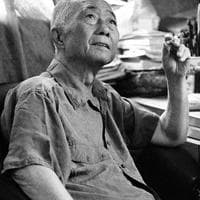
Yasujiro Ozu MBTI Personality Type
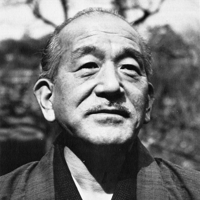
Personality
What personality type is Yasujiro Ozu? Yasujiro Ozu is an ISFJ personality type in MBTI, 9w1 - sp/so - 945 in Enneagram, in Big 5, EII in Socionics.
Please, don't listen to this message. Ozu was ISFJ. I'm leaving it here for the moment as a reminder that one needs to be very careful and knowledgeable to type correctly historical figures, but I might delete it later. ------------------------------------------------ As an introduction: I can't believe this guy was an IXFJ. There's no way he was a Si/Ni dom as I will expose. I'd say that people have voted him based on topics of him being a traditionalist or "the most Japanese filmmaker". But a good interpretation of his movies and knowing a bit of his life show that he was clearly an INXP. I will first contend the hegemonic view and then I will try to support my stance of him being an INFP with examples for each function. I hope I can convince you (this took a lot of time 😅). If you find any mistakes, please feel free to correct me. ------------------------------------------------ I don't want to sound rude, but seriously, this is possibly the worst typing I have ever seen. Being as objective as I can, I would say that the 5 best filmmakers of all time aside from Ozu are Fellini, Welles, Kurosawa, Murnau and Buñuel. All of them are typed as intuitives in this website. Are you telling me that the one that could be the greatest of them all is a sensor? A sensor would never base his narrative decisions on aesthetical aspirations, they would rather base them on their communicative usefulness. Just take a look at the films of Hitchcock, Wyler or almost any of the directors that thrived in Hollywood: when they tell a story, they want to make it as understandable as possible; Ozu, on the other hand, wasn't concerned with communication at all, he just wanted to be poetic, this is why almost all his shots could be hanged in a photographic exhibition. It is pretty obvious that you are typing him after watching his late movies, which means that you are not only typing an individual via his artistic production, but also that you are typing a >40-years-old individual who could have already developed his cognitive stack. This is literally like typing Einstein as a feeler by only taking into account his last years and forgetting how he treated his first wife in his youth. From the analysis of the 17 movies of him that I have watched, what I know about him is that: he was an ironist and an aesthete like Borges (INTP), he was very objective and critical, but also compassionate with his characters like Chekhov (INFP), he was the most original Japanese filmmaker and his late works where footnotes to the "Antigone" of Sophocles (ENFP), exploring familiar conflicts between tradition and novelty. My hypothesis is that he was an INXP. After reading the short biography present in the monography that Antonio Santos devoted to him, the Ne auxiliar and tertiary Si are clear. I found the dominant and inferior functions more difficult to identify, but I think there are better arguments for Fi and Te. Now, I proceed to give examples of each cognitive function. ☁️ Dominant Fi: I particularly see Fi>Ti in the fact that he kept all his critical views about politics or society hidden in his diary and came as a gentle and polite man. About his first movie: "I had the impression that that was not my film, and never watched it again." During his stay at Nankin, "he asked to a Chinese monk to calligraph the ideogram Mu: an aesthetic term that means void: a void plenty of meaning. The filmmaker kept that calligraphy for the rest of his life and transformed the ideogram in some kind of aesthetic and personal ideology that accompanied him to the grave." ⚡ Auxiliar Ne: "He made syncretism an aesthetic and thematic trait." He had only seen 3 Japanese pictures before starting to work at Shochiku. "The younger Ozu was fascinated by the American culture and cinema. He loved dressing with western garments and bought many foreign products. He was regarded as the most westernized of the Kamata studios directors." After watching several times Citizen Kane in Singapore: "This 24-year-old young man [Orson Welles] is even more awesome than Chaplin." 🏔️ Tertiary Si: "He collected film programmes. He classified them by genres; learnt by heart the names of the actors and directos; retained their arguments." "It is usually said that he was a distracted and not outstanding student." "He didn't go to the entry exam at the Kobe Superior School of Business because he prefered to go to the cinema to watch The Prisoner of Zenda." He worked as a substitute teacher in a village when he was 19 because the job didn't require any qualification and spent one year there drinking sake and insisting on his friends to go visit him. 💧Inferior Te: "During this days [when he started working at Shochiku], he doesn't show particular enthusiasm to become a director someday , because of the higher amount of work and responsability that that would entail."
Biography
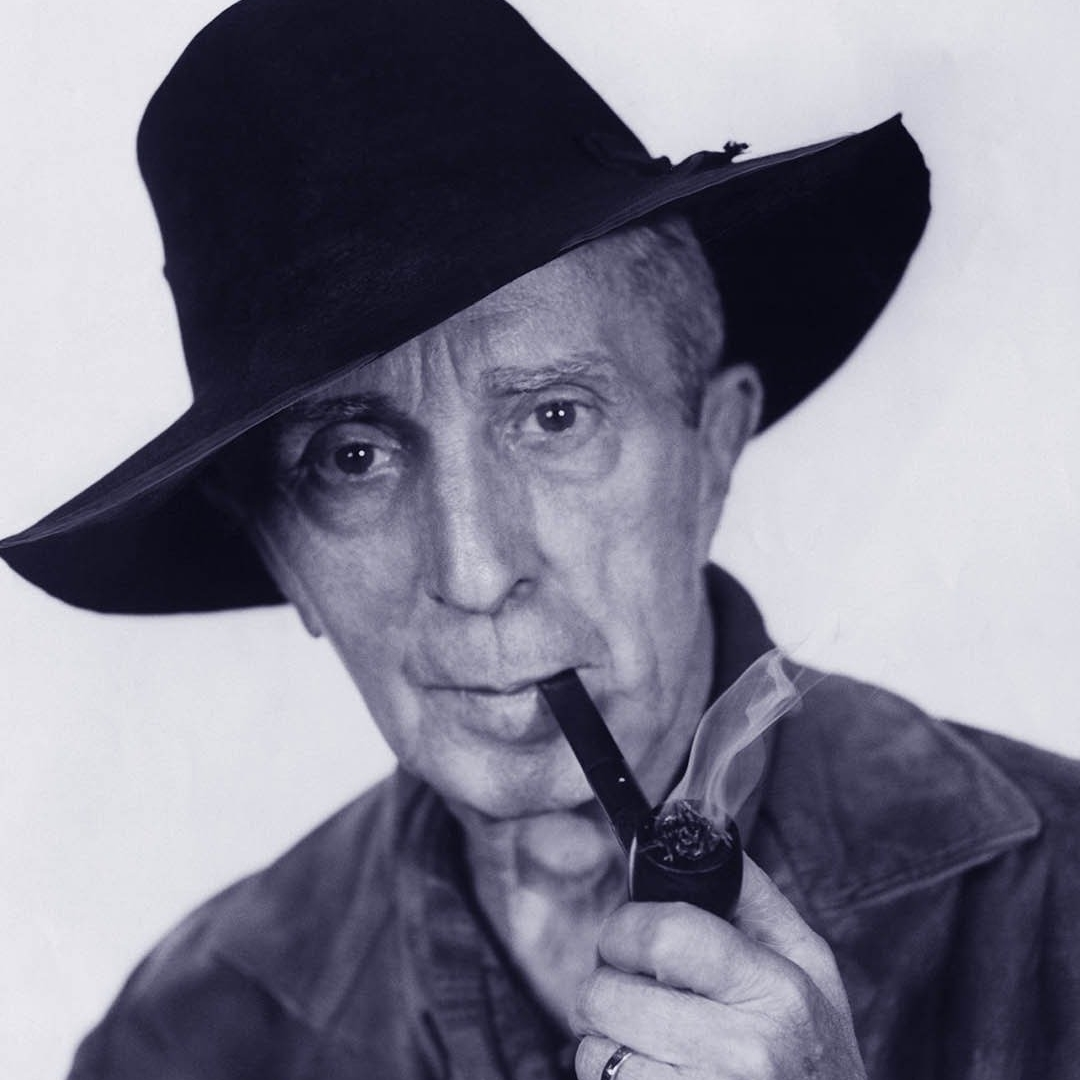
Yasujirō Ozu (小津 安二郎, Ozu Yasujirō, 12 December 1903 – 12 December 1963) was a Japanese film director and screenwriter.
Related Personalities
Quentin Tarantino
Hayao Miyazaki
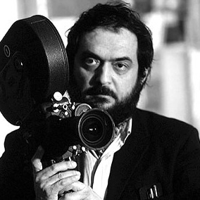
Stanley Kubrick
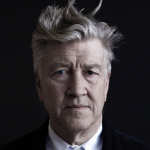
David Lynch
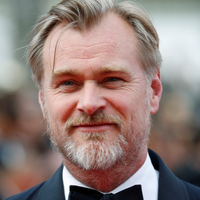
Christopher Nolan
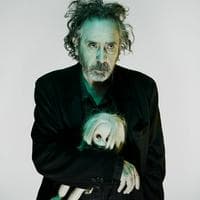
Tim Burton
Alfred Hitchcock
Martin Scorsese