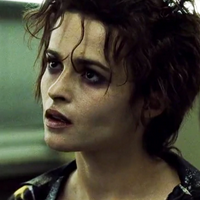
The Narrator type de personnalité MBTI

Personnalité
"Quel type de personnalité est The Narrator? The Narrator est un type de personnalité INFJ dans MBTI, 9w1 - sp/sx - 964 dans Enneagram, RLOAN dans Big 5, IEI dans Socionics."
People typing the narrator as Si dominant completely miss the point of the story. Yes, he lives in routine, comfort, and repetition, but the entire storytelling is about his hatred of that life, not his identification with it. Living in routine does not equal being cognitively driven by Si. In fact, his psychological conflict exists because that routine suffocates him. The narrator is trapped in a hyper capitalistic system that conditions him to value safety, consumption, and conformity. His attachment to routine is not natural preference but learned compliance. This is crucial. Si dominants find meaning and stability in routine. The narrator experiences routine as existential death. Tyler Durden is not a separate character in a typological sense. Tyler represents the narrator’s shadow. Every belief Tyler voices already exists inside the narrator as suppressed desire. Tyler is the embodiment of what the narrator wants to do but feels incapable of doing. That alone disqualifies an Si dominant interpretation. The narrator constantly analyzes himself, society, masculinity, consumerism, and the emptiness of modern life. His dissatisfaction is abstract, symbolic, and future oriented. He is not nostalgic, not tradition bound, and not detail attached. His suffering comes from an internal vision of what life should be, contrasted with what it is. That is classic Ni dissatisfaction. Tyler Durden fits ESTP almost perfectly. He is impulsive, confrontational, physical, action driven, sensation focused, and thrives in chaos and direct experience. If Tyler is the shadow, then the narrator must sit on the opposite cognitive axis. The opposite of ESTP is INFJ. This also explains the core problem of the narrator: execution. He can see through the system. He understands what is wrong. He imagines radical transformation. But he cannot act. He freezes at the point of confrontation and real world application. This is textbook Se inferior. Tyler exists to compensate for that weakness. Tyler does what the narrator cannot. He acts without hesitation. He embraces danger, violence, sexuality, and destruction. Tyler is not random. He is the narrator’s inferior function unleashed without restraint. INFJs often report seeing themselves in the narrator because the story externalizes what happens internally. The endless internal monologue, the awareness of societal decay, the self loathing, the paralysis inside comfort zones, and the fantasy of burning everything down just to feel alive. And who understands INFJs better than INFJs themselves. The story is not about being an Si user trapped in routine. It is about an Ni dominant person suffocating in a world that rewards conformity, until his shadow takes over and forces confrontation with reality. That is the entire point of Tyler Durden. And somehow people still think it is about furniture catalogs.
Biographie
The unnamed protagonist of Fight Club, a chronic insomniac who is unfulfilled both by his job as an automobile recall specialist and the material wealth it affords him. #EdwardNorton