Penelope MBTI 성격 유형

인격
"Penelope은 어떤 성격 유형입니까? Penelope은 mbti의 INFJ 성격 유형입니다. enneagram의 6w5 - SP6 - 614, big 5의 RLOAI, socionics의 LSE입니다."
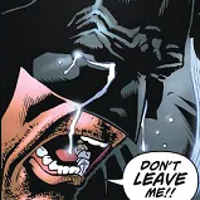
My Analysis Thus Far ~ Nolan’s Penelope: ~An Emotional Externalization of Homer’s Penelope~ Nolan’s Penelope is not a reinterpretation but an emotional externalization of Homer’s Penelope. The adaptation shifts much of her internal narration into visible behavior, allowing audiences to witness the grief, longing, and symbolic thinking that Homer primarily conveys through speeches, dreams, and introspection Her defining psychological pattern remains unchanged: she is a woman whose identity has become inseparable from twenty years of waiting, whose hope is sustained through symbolic acts rather than practical calculation, and whose conflicts repeatedly return to loss, memory, and enduring love For that reason, the film strengthens rather than contradicts an interpretation of Penelope as an INFJ (Ni Fe) with an Enneagram 4w5, Social 4, 495, Melancholic (Dominant) temperament. The adaptation changes the medium of expression, from narrated interiority to observable emotion, without fundamentally changing the character Homer created If anyone would like to read my full analysis of Penelope in Homer’s Odyssey, it can be found here: https://www.personality-database.com/comment/12754269?profileID=20227 1 Grief remains her defining psychological state. In Homer, Penelope’s interior monologues revolve around: ~wishing for death ~continual weeping ~dreams of Odysseus ~comparing herself to other tragic women ~an inability to escape grief In Nolan’s film, those inner monologues become visible through performance: >she is almost continually tearful >she lashes out emotionally >conversations repeatedly return to twenty years of waiting >she centers her own mourning during conflicts The expression changes, but the emotional center does not 2 Her hope is symbolic rather than practical. One of the strongest continuities is that Penelope consistently acts through symbols In Homer: ~the weaving ~the bow contest ~testing the disguised Odysseus ~dreams ~prayer None of these are the most efficient solutions. Instead, they preserve meaning The film continues this pattern One particularly telling scene occurs when Odysseus asks her to promise that, if he never returns, she will marry another man She immediately slaps him, the thought itself is unbearable. The moment is then followed by tenderness, as she makes it clear that, for her, such a future will never exist. His request could have become permission for her to move on Instead, she remembers that conversation symbolically. Rather than accepting its literal meaning, she transforms it into an impossibility. something only Odysseus himself could ever resolve That is not merely stubbornness It is symbolic fidelity 3 Her arguments with Telemachus remain centered on grief This is perhaps the strongest point supporting the continuity between Homer and Nolan Their disagreements are not primarily about: ~succession ~governance ~politics ~practical necessity Instead, they repeatedly return to her mourning: — “I’ve waited twenty years.” —“You don’t understand what I’ve lost.” —“How can you ask me to let him go?” When Telemachus attempts to step into adulthood, Penelope responds, “Nothing but still a boy…” Rather than recognizing the man he has become, she continues to relate to him through the emotional world that existed before Odysseus left. 4 Ni remains the organizing perception. My original analysis of Homer’s Penelope argued that she consistently interprets reality through: ~dreams ~symbols ~memories ~implications ~inner certainty Nolan’s film appears to preserve that orientation. She remains psychologically anchored to one internal reality: Odysseus belongs here. During one argument with Telemachus, she cries: “I want Odysseus!” Everything else is interpreted through that conviction. Even when nearly everyone accepts Odysseus’ death, she struggles to reorganize her inner world around that conclusion. 5 The Four structure becomes more visible. This is perhaps where Nolan expands rather than changes her characterization. Homer often communicates Penelope’s suffering through narration, speeches, dreams, and introspection. Film cannot rely on internal narration in the same way. Instead, Nolan externalizes it through: > tears >anger >emotional breakdowns >raising her voice >clinging to memories >repeatedly invoking twenty years of waiting These additions do not necessarily alter her motivations. Rather, they make visible what Homer frequently describes internally. Taken together, these patterns remain consistent with an interpretation of Penelope as an INFJ (Ni–Fe) with an Enneagram 4w5, Social 4, 495, Melancholic (Dominant). While typology is inherently interpretive, Nolan’s portrayal preserves the same underlying psychological structure found in Homer’s Odyssey, expressing it outwardly through performance rather than inwardly through narration
전기
Odysseus's wife, Telemachus's mother, and the queen of Ithaca, who is fending off potential suitors in his absence.