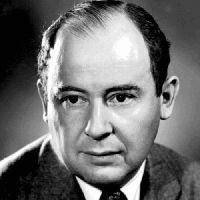
John von Neumann MBTI Personality Type
Personality
What personality type is John von Neumann? John von Neumann is an ENTP personality type in MBTI, 7w6 - so/sp - 731 in Enneagram, SCUEI in Big 5, ILE in Socionics.
Smartest human who ever lived. We owe the Computer Age to von Neumann architecture. His brain was like a pristine, perfectly calibrated machine, even though he appeared socially playful and perfectly ordinary in casual conversation. https://www.youtube.com/watch?v=vLbllFHBQM4 You can see the NeTiFe clearly here. The very first few sentences is a volley of NeTi style logic-chopping. Here is Edward Teller's testimonial of Von Neumann as a person. https://youtu.be/Oh31I1F2vds?si=1h1sMa0FOdrKow3r He is certainly not an E5. He did not have the need to withdraw from external demands due to a fear of energy depletion or running out of bandwidth (no fixation/passion of Stinginess or Avarice of E5). He worked whenever and wherever he could: at the kitchen table, at the beach, in the train. He had a need for constant stimulation, and since intellectual work was what was most stimulating to him, a need for constant mental activity. This is the Gluttony of E7. He always preferred a TV playing when he worked (once chiding his wife for creating a study room for him without a TV). His neighbor at work, Einstein, complained that he was always blaring German march music. von Neumann also had a noticeable bon vivant side that is a signature of SP7. He hosted parties at his house a couple of times every week, indulged in rich food and drink, would stay at the party amidst discussions or banter until late at night and deliver a lecture the next morning without notes. He was known to be an absolutely reckless driver, often reading novels while driving. He got ticketed and into car accidents numerous times. His wife said he could count anything except calories.
Biography
John von Neumann (December 28, 1903 – February 8, 1957) was a Hungarian-American mathematician, physicist, computer scientist, and polymath. Von Neumann was generally regarded as the foremost mathematician of his time and said to be "the last representative of the great mathematicians"; a genius who was comfortable integrating both pure and applied sciences. He made major contributions to a number of fields, including mathematics (foundations of mathematics, functional analysis, ergodic theory, representation theory, operator algebras, geometry, topology, and numerical analysis), physics (quantum mechanics, hydrodynamics, and quantum statistical mechanics), economics (game theory), computing (Von Neumann architecture, linear programming, self-replicating machines, stochastic computing), and statistics.
Related Personalities

Alan Turing

William James Sidis
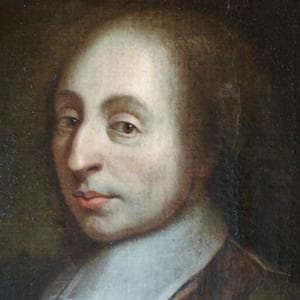
Blaise Pascal

Srinivasa Ramanujan
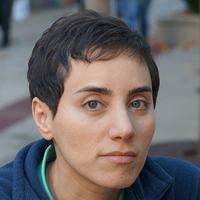
Maryam Mirzakhani
John Nash
Gottfried Wilhelm Leibniz
Carl Friedrich Gauss